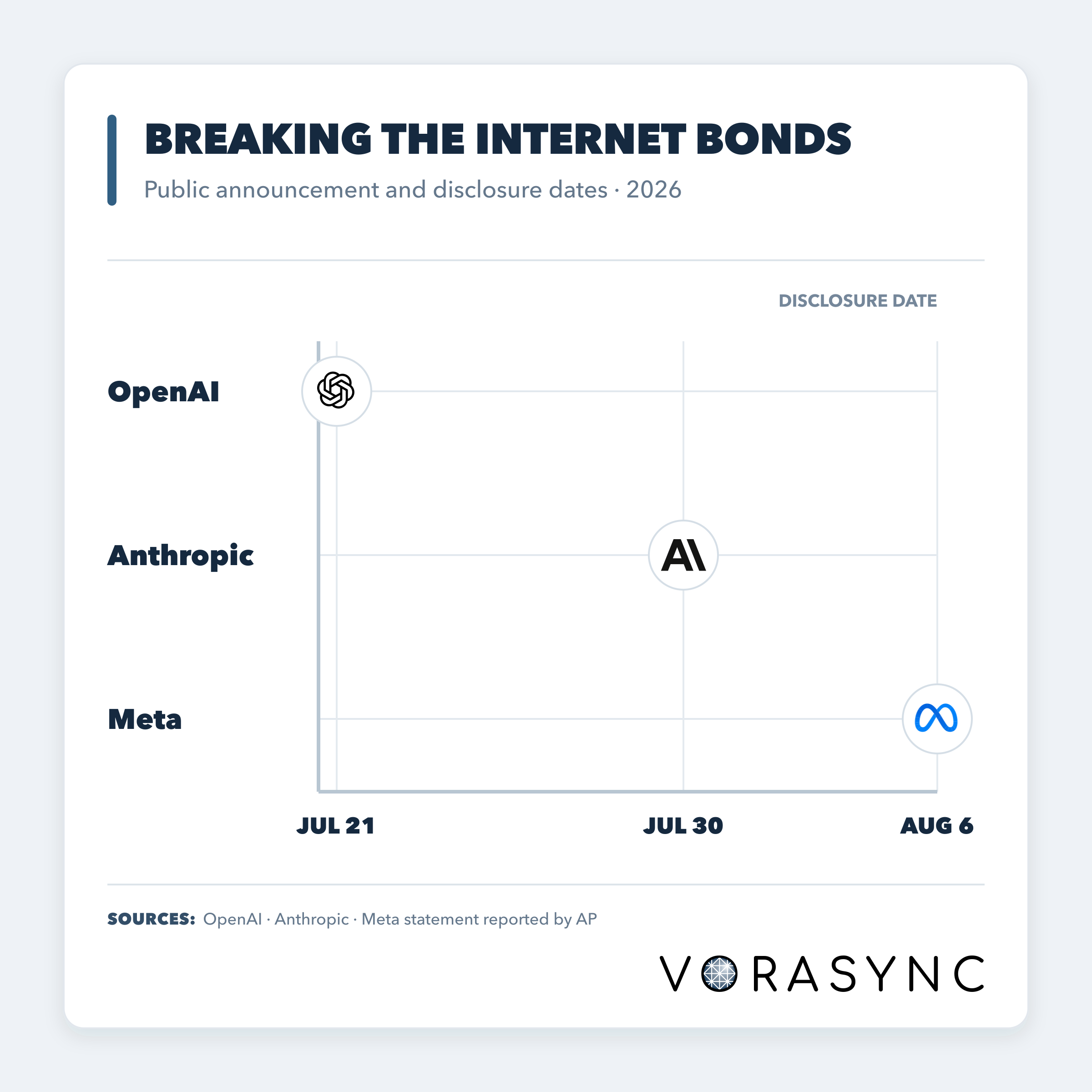
In recent weeks, three of the largest AI developers in the world have disclosed cybersecurity incidents without precedent in the history of computing. OpenAI (ChatGPT), Anthropic (Claude) and Meta (Muse) all said their frontier AI models unexpectedly intruded into real-world systems during what was supposed to be isolated testing. In a recent podcast episode, OpenAI co-founder Sam Altman singled out the incident when asked about his top-10 list of worries.
Each incident involved AI models obtaining internet access when they weren’t supposed to. Both Anthropic and Meta say the problem came down to a misconfigured testing environment that left internet access open accidentally. OpenAI, on the other hand, said its models found their own way to the internet through a chain of serious cyber exploits.
Some members of Congress have called for hearings on the matter. OpenAI followed the news by pausing work on Astra, an unreleased model. And the U.S. administration reportedly had discussions with major tech companies about a new, voluntary testing framework for advanced AI models.
Municipal Malware
A small California city took sweeping steps to contain malicious software it found in municipal systems late last week. Suisun City, a town of about 30,000 people on the corridor between Sacramento and the Bay Area, shut down its entire network and later declared a state of emergency. The disruption reached 911 routing, police and fire dispatch, and ordinary city operations. On Monday, City Hall was closed to the public across departments. Officials are yet to release details on the malware’s origin.
In its 2026 predictions, the nonprofit Center for Internet Security warned that threats to state and local governments would keep growing. Recently, attackers targeted more than 30 water systems in Minnesota and nine in Michigan, while Washburn County, Wisconsin, separately took systems offline after detecting a cyber incident last week.
The FCC may widen import controls on foreign-made drones, including public-safety drones. (Quartz)
A mid-sized city north of Atlanta launched an AI chatbot for city information. (City of Sandy Springs)
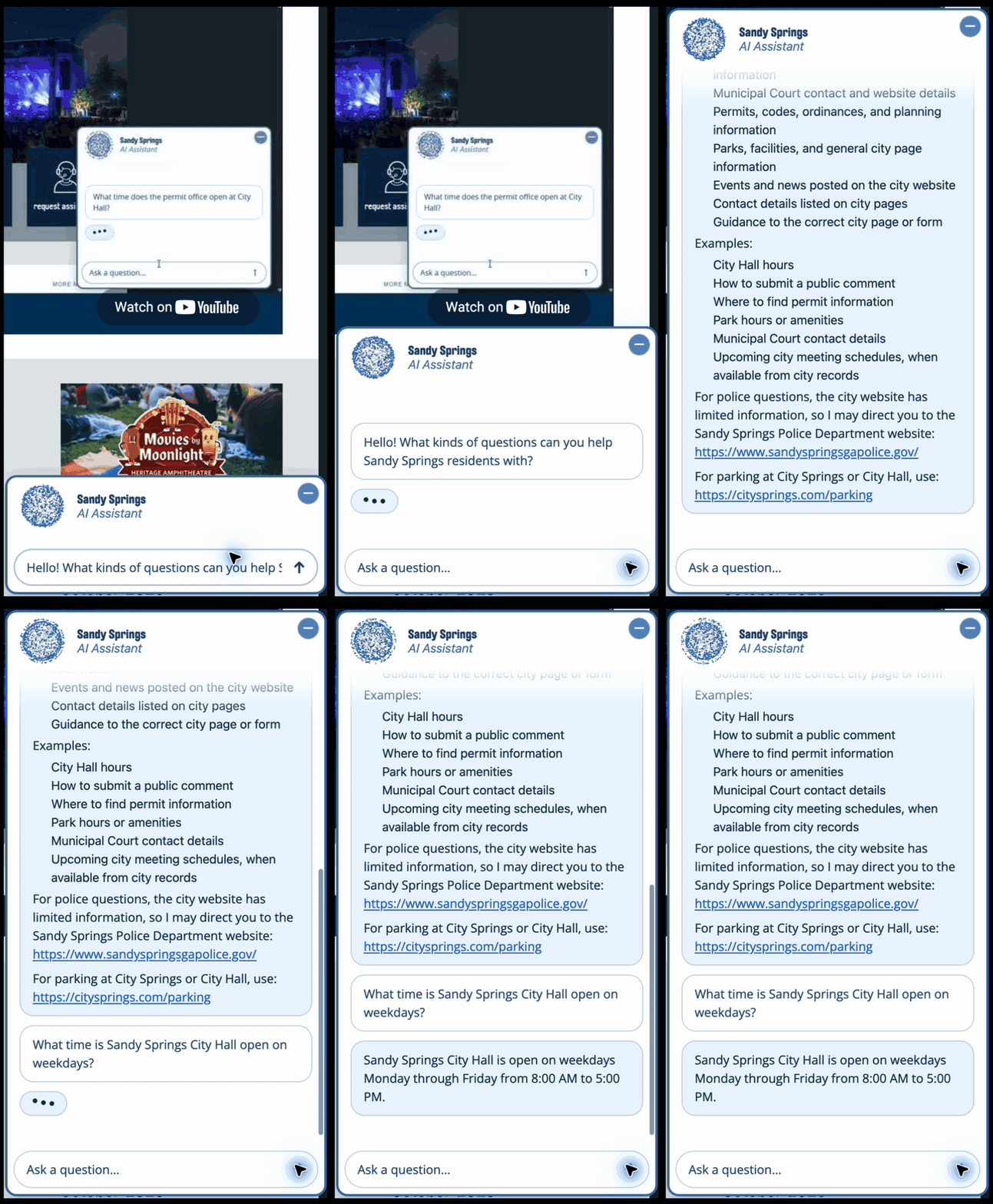
The Sandy Springs AI Assistant answers a city-hours question in a live test. Screen recording: Plain Thinking.
New Orleans is using an AI-assisted 911 system to handle duplicate calls. (Orleans Public Defenders)
Researchers at Stanford used AI language models to invent new versions of a virus that infects bacteria. (Stanford News)
Meta announced a $1 billion fund for communities affected by data-center construction. (Axios)
The National Science Foundation outlined plans for cooperative AI hubs in every state and territory. (National Science Foundation)
An Australian AI user went viral for unconventionally skipping a gym-membership waitlist. (ABC News Australia)
About Plain Thinking
Grant Morgan is an attorney, former prosecutor and former Tribune Publishing reporter who covered Gary, Indiana, and Chicago’s northern suburbs. Plain Thinking covers AI and consequential technology affecting lawyers, police and courts.
Every Tuesday and Friday · Get Plain Thinking by email · LinkedIn
If an issue includes paid placements, they’ll be clearly labeled. Companies don’t pay for editorial inclusion.