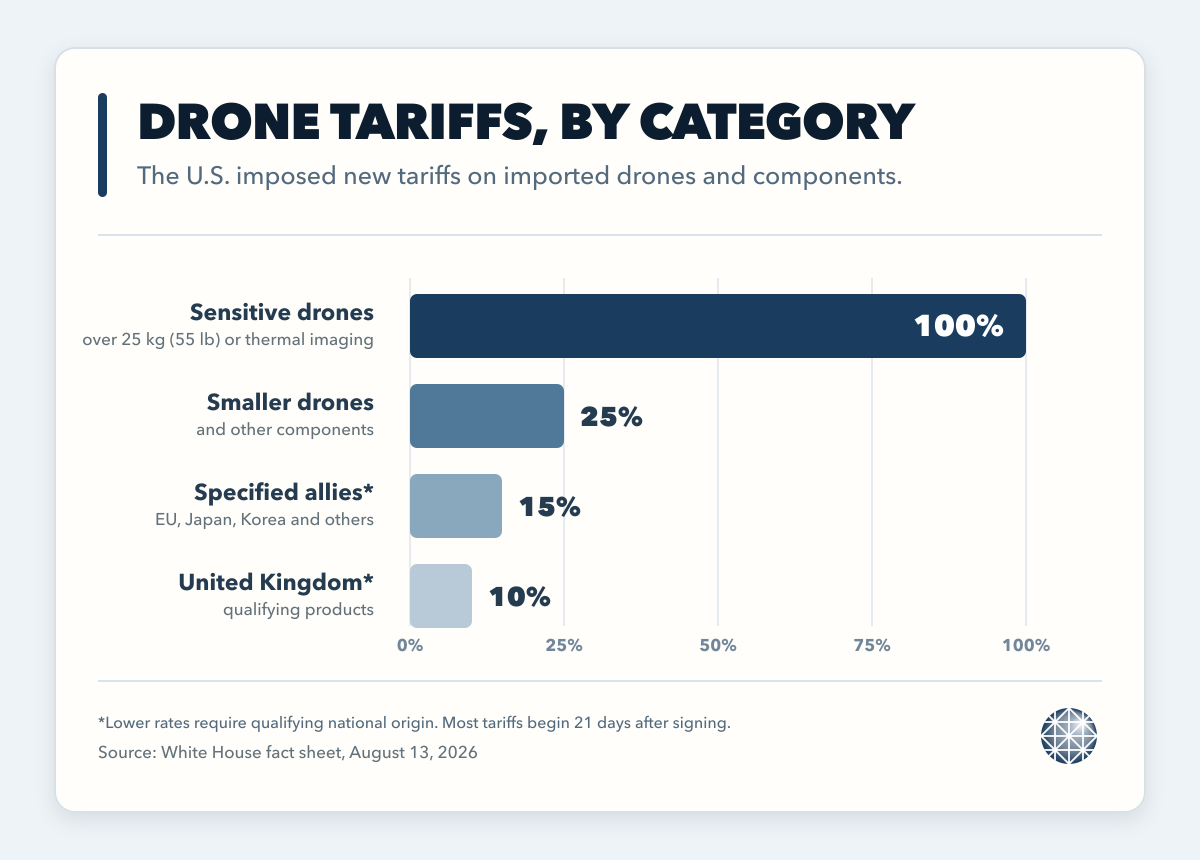
This morning, the U.S. administration put tariffs on imported drones. Most of the tariffs go into effect September 3, 2026, while some are delayed until February 2027. The rate is 100% for drones with infrared, or drones that weigh more than 55 pounds at takeoff.
This follows an FCC proposal last week that would use the agency's authority over radio equipment to outright ban drones falling under the same two criteria (and five additional). The agency cites national security risk. Its proposal is open for comment until September 2, 2026. Yet drones are fast becoming integral to policing. Recent reporting out of Dallas and St. Petersburg highlight the efficiencies — and privacy concerns — of sending out drones as first responders.
Cyber Risk
Public institutions are suddenly being asked to make cybersecurity a top priority. In recent weeks, almost 40 water systems in Michigan and Minnesota were attacked with malicious software. Several localities across the U.S. have made headlines for shutting down critical systems, including in California, Wisconsin, and Missouri. And some states are pouring dollars into programs aimed to beef up digital security across agencies.
Cyber risks are now reaching engineering and manufacturing. On Thursday, an extortion group called Cl0p said it breached nearly 50 companies through software used to share information in engineering and manufacturing. It named Philips, Shell, Fiserv and General Electric among the victims. The same day, CISA, the federal government’s cybersecurity agency, released a slate of new security warnings covering technology in utilities, building controls and physical operations.
A Connecticut pro se plaintiff tried to prompt-inject a court of law. (Harris Beach Murtha)
Five hundred staff will be put into a new federal fraud enforcement division, according to the Justice Department. (Department of Justice)
Flock is tightening search restrictions and data retention on its ALPR products. (Flock Safety)
An officer in Florida and another officer in Texas are in hot water for improper ALPR use. (People; ABC13 Houston)
The U.S. administration wants vetted, private companies to join federally controlled cyber operations. (The White House)
New York partnered with IBM for AI, cloud and cybersecurity tools across state agencies. (New York State Office of Information Technology Services)
Ohio followed Texas in creating a statewide template for data sharing among agencies. (StateScoop)
Colorado put AI requirements into state law for psychotherapists. (Colorado General Assembly)
A Pennsylvania school district is negotiating AI safeguards itself amid a patchwork of state and federal rules. (Connecticut Mirror)
A RAND market report shows AI crowding in the field of emergency management, with most vendors not publishing prices. (RAND)
About Plain Thinking
Grant Morgan is an attorney, former prosecutor and former Tribune Publishing reporter who covered Gary, Indiana, and Chicago’s northern suburbs. Plain Thinking covers AI and consequential technology affecting lawyers, police and courts.
Every Tuesday and Friday · Get Plain Thinking by email · LinkedIn
If an issue includes paid placements, they’ll be clearly labeled. Companies don’t pay for editorial inclusion.