
|
Mass. Flock Exodus
|
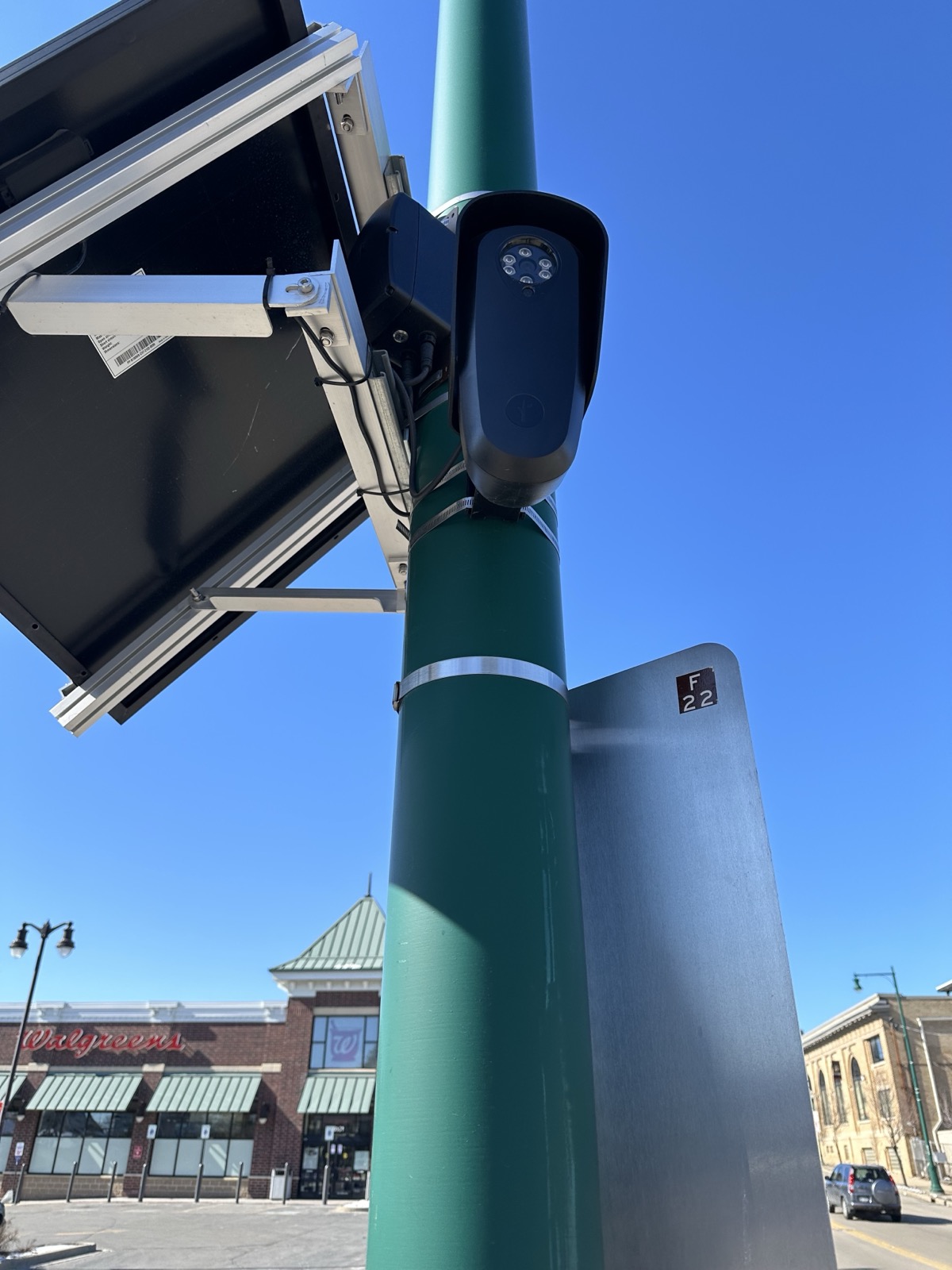
A Flock Safety automated license plate reader. Photo: Bruxton / Wikimedia Commons, CC0.
Massachusetts communities are walking away from Flock Safety’s license-plate readers. Abington, Ayer and Groton ended their contracts Monday, while Southbridge suspended its rollout. East Bridgewater, Grafton, Auburn, Bellingham and Douglas had discontinued Flock the previous week, and Easton plans to leave when its contract expires. That does not mean the cameras do not work. Police departments say they help recover stolen vehicles, locate missing people and find suspects. But the pullback came as a Suffolk Superior Court judge ordered the Massachusetts State Police to disclose camera locations and records showing when, why and how often troopers searched its ALPR system, with plate numbers redacted. Massachusetts has not banned Flock. It now has a cluster of local exits, a court order opening State Police records and a growing dispute over whether the existing safeguards are enough.
| • |
New Bedford’s police chief recommended firing two officers over personal Flock searches. (New Bedford Police) |
| • |
Florida ordered standalone ALPR devices removed from state-highway rights-of-way within 30 days. It is not a statewide ban. (FDOT) |
| • |
California let an ALPR safeguards bill die without a final Assembly vote. (CalMatters; California Legislature) |
Driverless

A Tesla Cybercab. Courtesy of Tesla, Inc.
Texas has a new car on the road that can break the law but cannot go to jail. Tesla launched dozens of Cybercabs without steering wheels or pedals onto Austin streets Thursday. Texas law says the automated driving system is the vehicle’s operator. But when it violates a traffic law, the citation goes to the owner or authorized fleet operator. That works for a red light. If a driverless car kills someone, a prosecutor would still have to identify a person or company whose conduct and state of mind meet the elements of a crime. The American cases so far do not cleanly answer that question for a vehicle with no human driver or controls. They do suggest that the car’s video, telemetry, software version and remote-intervention history could become criminal evidence.
Courts

The Ohio Judicial Center, home to the Supreme Court of Ohio. Photo: Mtfarr24 / Wikimedia Commons, CC BY-SA 4.0.
Court data is at risk. On Wednesday, C-Track, a case-management system owned by Thomson Reuters, disclosed that an intruder obtained files associated with courts across North America. The breach dates to March and affects courts or court systems in 12 states, the U.S. Virgin Islands and Ontario. C-Track discovered the activity June 30, about three months after the files were taken; its public notice came September 2. Some files may have contained Social Security and driver’s-license numbers, medical information, and confidential, redacted or sealed material. C-Track says the courts’ own networks were not the point of entry.
Cybersecurity

GPT-6 Astra launch artwork. Image: OpenAI.
OpenAI says its newest model can find and exploit security holes no one knows about yet. GPT-6 Astra is the first model the company has rated “Critical” for cybersecurity. In OpenAI’s tests, it found new flaws in a web browser and an operating system, then used them to break in. OpenAI slowed Astra’s release and paused some work while strengthening its security, then released it Thursday with tighter controls and monitoring. The company’s definition is blunt: at this level, a model can be given a hardened target and a general goal, then plan and carry out a new attack without a person guiding it. (OpenAI; Axios)
| • |
OpenAI pledged $1 billion to give frontline cyber defenders—including governments and utilities—access to its advanced models. (OpenAI) |
| • |
On Tuesday, Anthropic released Claude Fable 5.1, its strongest general-use model to date. (Anthropic) |
Number of the Day
1 in 6
People in the U.K. with a legal problem who used an AI chatbot for help, advice or information, according to JUSTICE and the Administrative Fairness Lab.
In Other News
Pete Hegseth’s driver’s license was for sale in a dark-web cache claiming 153 million scans. (KrebsOnSecurity)
Another AI hallucination blunder got a lawyer’s brief struck and triggered a disciplinary referral in D.C. (D.C. Court of Appeals)
California lawmakers unanimously passed a bill requiring lawyers to disclose AI use in court filings. (California Legislature)
A fast-growing Arizona town adopted a template for ALPR audits and made misuse a misdemeanor. (Queen Creek Town Council)
New York City banned AI for pre-K through eighth grade for one year. (NYC Public Schools)
The Justice Department says training AI on copyrighted work is fair use. (Associated Press)
Nvidia is buying the internet’s biggest platform for open-weight AI models. (Nvidia)
Tech companies have a new communications playbook for when systems go down. (CISA, FBI and international partners)
About Plain Thinking
Grant Morgan is an attorney, former prosecutor and former Tribune Publishing reporter who covered Gary, Indiana, and Chicago’s northern suburbs. Plain Thinking covers AI and consequential technology affecting lawyers, police and courts.
Every Tuesday and Friday · Get Plain Thinking by email · LinkedIn
If an issue includes paid placements, they’ll be clearly labeled. Companies don’t pay for editorial inclusion.
|