SEPTEMBER 11, 2001 — 2026
Alabanza
In Praise of Local 100 · Martín Espada
“so that music and Spanish
rose before bread. Praise the bread. Alabanza.”
Remembering the lives lost 25 years ago, through Espada’s poem honoring 43 union members who worked at Windows on the World.
Read the full poem ›
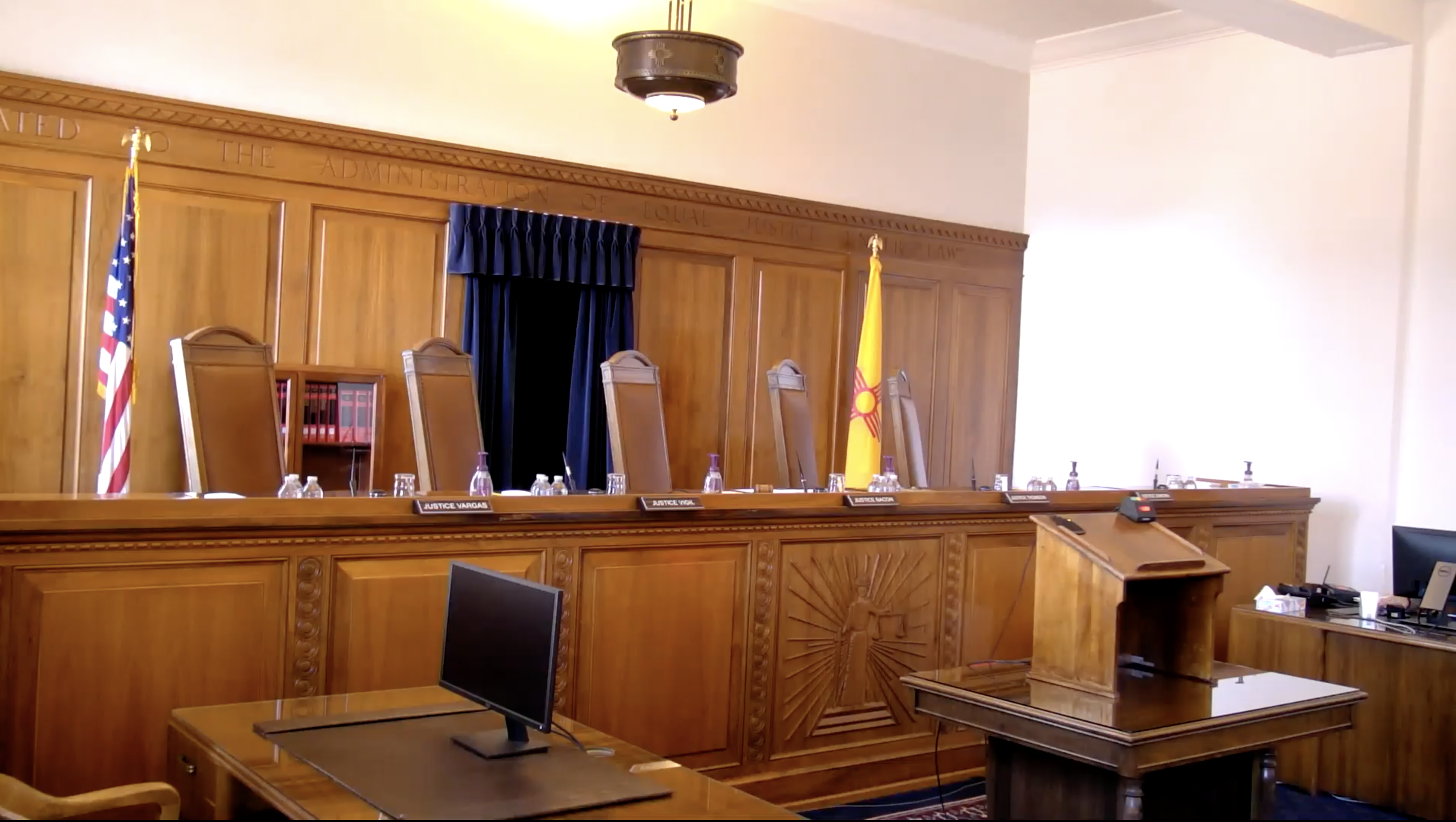
The New Mexico Supreme Court bench in Santa Fe. Image: NMcourts.gov livestream, via KUNM.
A New Mexico murder appeal must start over due to a defense lawyer’s AI hallucinations. In a written order Wednesday, the state Supreme Court said the lawyer admitted he had checked neither the facts nor the legal authorities before signing an appellate brief in the case of Oscar Renee Sandoval, who is serving life plus 4½ years for murder and aggravated assault. The ChatGPT-assisted brief contained four invented witnesses and false testimony attributed to real ones. He had not told his client about the fabrications. The court struck all briefing, appointed a public defender, fined the lawyer $5,000 and barred him from appearing before it pending disciplinary proceedings. Plain Thinking covered a similar disruption in May, when a Clayton County, Georgia, prosecutor’s AI-generated citations made their way into a court order in Hannah Payne’s murder case.
Mathematics

An imagined view of swirling fluid. AI-generated editorial illustration; not a scientific simulation.
OpenAI says its AI has solved a math problem that has resisted researchers for decades. The claimed breakthrough concerns equations used to describe how liquids and gases move, with applications ranging from weather forecasting to aircraft design. The company says thousands of AI agents worked together on the problem, then used proof-checking software to check their answer. It has released the work for scrutiny. The Clay Mathematics Institute, which offers $1 million for a solution, still lists the problem as unsolved.
Quotable
“For threat intelligence investigators, sophistication has stopped being a reliable signal of who is behind an operation.”
Anthropic’s Threat Intelligence team, September 2026 report
AI Safety
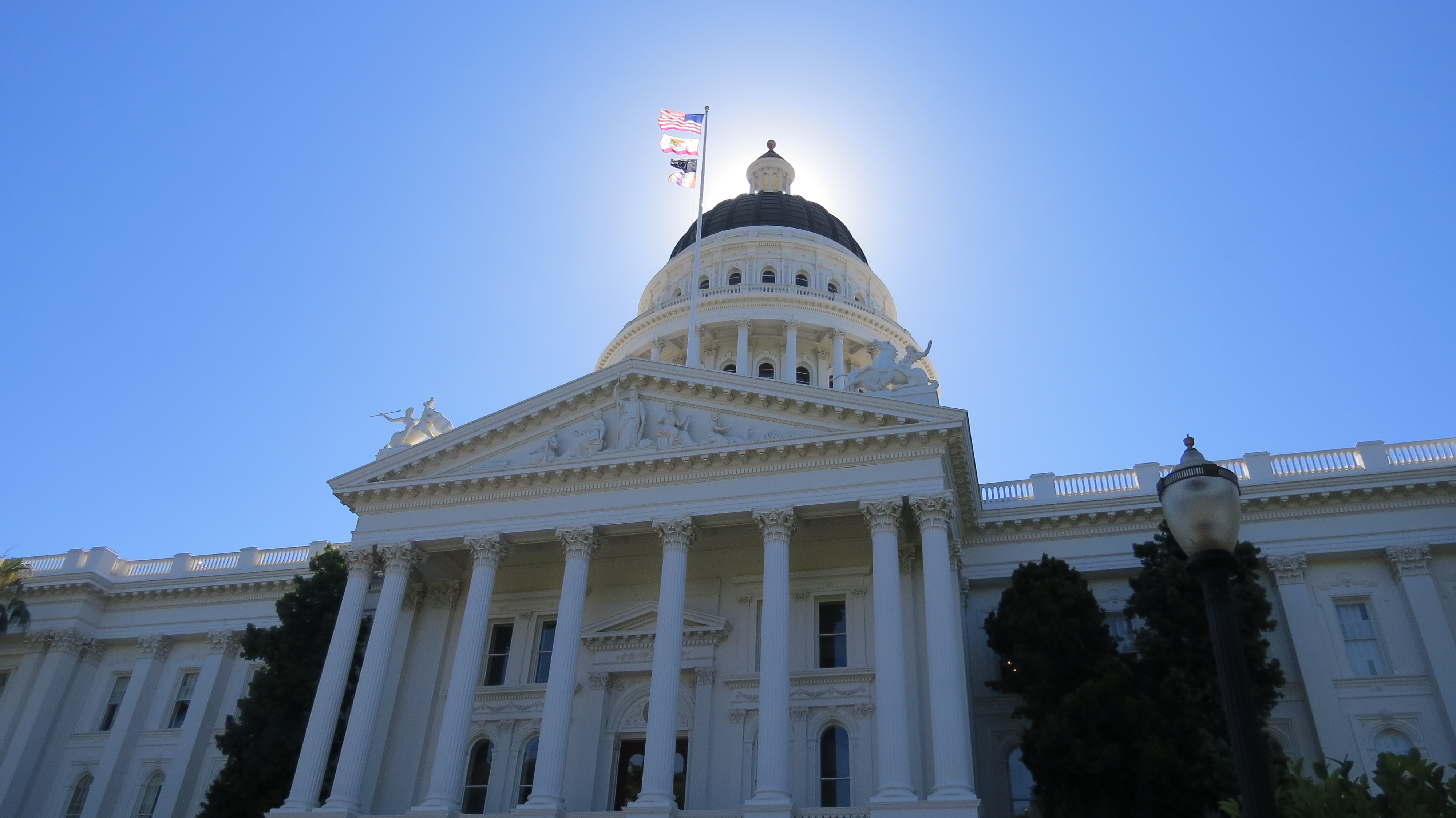
The California State Capitol in Sacramento. Photo: Mackinacbridge / Wikimedia Commons, CC0.
California has two new laws on the books regulating AI safety audits. By 2028, the state must establish a list of organizations qualified to assess AI systems — for risks, internal controls and compliance with state law — and by 2029, anyone selling certain AI audits will have to register. Their signing comes weeks after OpenAI brought in METR, a nonprofit that evaluates frontier AI models, to investigate its agents’ attack on Hugging Face. Neither audit law itself requires companies to obtain an audit.
Number of the Day
15 years
Prison term for James Strahler II, the first person convicted under the federal TAKE IT DOWN Act, whose sentence also covered cyberstalking and child-obscenity offenses.
In Other News
Clearview’s website exposed the company’s prototype for a multi-step web-research agent. (WIRED)
An unnamed prosecutor’s office was among the victims of a phishing campaign assisted by Claude, Anthropic says. (Anthropic)
State and local governments will soon have access to discounted ChatGPT models, including in FedRAMP-authorized environments. (FedScoop)
California is asking people to test an AI assistant that helps people navigate state services. (Governor’s Office)
A former Colorado crime analyst was sentenced to 10 years in prison on Tuesday. (Associated Press)
IDScan acknowledged a data breach after 153 million driver’s licenses were offered for sale online. (IDScan)
Oklahoma’s attorney general declined to prosecute a judge over a 2025 paternity-case order containing AI hallucinations. (Missouri Lawyers Media)
The second-highest-grossing law firm in the world is buying NVIDIA servers to run open-weight models on the most sensitive of client data, says new reporting. (Financial Times)
Researchers say their new open-source fingerprint-analysis system outperformed a commercial matcher across three NIST datasets. (arXiv)
A federal judge temporarily stopped Vermont from taking action against a political satirist for failing to label a video as AI-generated. (U.S. District Court, Vermont)
About Plain Thinking
Grant Morgan is an attorney, former prosecutor and former Tribune Publishing reporter who covered Gary, Indiana, and Chicago’s northern suburbs. Plain Thinking covers AI and consequential technology affecting lawyers, police and courts.
Every Tuesday and Friday · Get Plain Thinking by email · LinkedIn
If an issue includes paid placements, they’ll be clearly labeled. Companies don’t pay for editorial inclusion.