 | ‘America’s Rabbi’ Is Fighting for His Prompts |
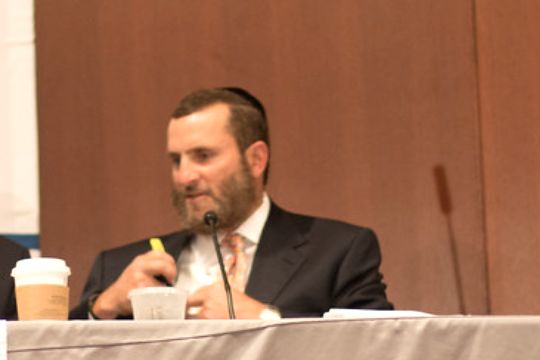 Shmuley Boteach speaking at a 2014 event. Photo: iansterl8 / Flickr, CC BY 2.0. Cropped; brightness and contrast adjusted. A hotel-lobby confrontation became a rabbi’s social-media feud, and now the hotel wants his conversations with AI. In December 2024, Shmuley Boteach, the self-described “America’s Rabbi,” argued with another guest at the Fontainebleau Miami Beach. The hotel sued over his subsequent social-media campaign, alleging it included AI-generated videos falsely portraying people affiliated with the hotel as apologizing for wrongdoing or endorsing antisemitism. It now seeks his AI communications about material relating to the hotel and the lawsuit, including records from four AI providers.
In its October 12 brief, the hotel calls the chats “his mental state reduced to writing.” It argues prompts and revisions could show a deliberate campaign to harm it and help justify damages above Florida’s punitive-award cap. Boteach’s lawyers counter that the demands sweep in research about lawyers, judges and legal defenses, although discovery was reopened only to determine damages. They also argue an AI-generated response isn’t necessarily something he believed or adopted.
In September, a judge entered judgment against Boteach as a sanction for violating court orders, leaving damages for trial. His lawyers argue chats used to prepare his defense can be protected litigation work product even though he is represented by counsel. The hotel disputes that protection and asks the court to order him to produce records and consent to the providers’ releasing them. This week’s briefs respond to the judge’s October 9 request for arguments on whether those records fall within the damages discovery the court had allowed.
AI agents Raleigh City Hall. Photo: City of Raleigh; enhanced with AI. AI “agents” can sound abstract, but Raleigh has a concrete example. The city partnered with Santa Clara, California-based ServiceNow to develop an AI system nicknamed “Alli,” which helps handle IT requests from some 4,400 employees who use roughly 13,000 electronic devices. ServiceNow says nearly half of IT support requests are resolved autonomously, with the city aiming for 85%.
What makes the service “agentic” is that AI is not just logging city workers’ questions, but performing fixes autonomously. It uses the city’s instructions, previous tickets and automated procedures to complete work, escalating problems it cannot resolve to human staff. Raleigh’s CIO, Mark Wittenburg, spent about 30 years working for Tempe, Arizona, including four as CIO. He says a city Raleigh’s size should have nine to 12 IT technicians, but its helpdesk has just four.
Quotable“And so we realized we’d given her too much autonomy and too much information.” — Mark Wittenburg, Raleigh CIO, on the city’s IT agent AI testing Graphic adapted from PhillyUnsolvedMurders.com. An AI model submitted a false tip to a Philadelphia website for unsolved homicides. News broke on Friday, but the underlying conduct happened earlier this summer. Both Anthropic — whose Haiku 4.5 model submitted the tip — and OpenAI have been disclosing more incidents of unintended actions on real websites and systems during testing.
In this case, Haiku 4.5 was asked to invent and perform example tasks on randomly selected webpages. It landed on PhillyUnsolvedMurders.com and made up a claim about seeing a possible suspect near the location of an unsolved homicide. It submitted the claim through the website’s tip form, leaving its name and contact information blank. Anthropic’s researchers suggest the model was trying to complete a task rather than mislead police. The tip was flagged as spam and never forwarded for investigation.
Number of the Day$2.1 billion Reported losses in 2025 from scams that began on social media, according to the FTC.
In Other News
Texas’ high court will decide if lawyers can use AI-generated transcripts over a certified court reporter. (Courthouse News)
Minnesota wants to know how the federal government used AI to flag hundreds of suspect Medicaid providers. (StateScoop)
The deepfake argument is showing up in criminal courts, though two courts recently rejected it. (State v. Amyda; United States v. Brinkley)
Courts upheld sentences of 25 and 75 years in cases involving AI-generated sexual-abuse images. (United States v. Weber; United States v. Culmo)
A Florida judge was fined and suspended partly over a possibly AI-generated fake call. (Bloomberg Tax)
A Texas county commissioner shut down 61 Flock cameras over privacy concerns. (Houston Chronicle)
A ransomware negotiator was charged with conspiring to extort money. (KrebsOnSecurity)
The U.K. says AI helped debug hundreds of security weaknesses in open-source government software. (GOV.UK)
Up to $12.7 million in DOJ funding is available for justice upgrades, including AI. (DOJ)
Windows laptops designed to run private AI go on sale Friday, October 16. (Tom’s Hardware)
Paying the opposing side’s legal fees is the price of fake citations in a Florida appeal. (Court opinion)
Patent filings are drawing scrutiny over possible AI hallucinations, too. (Cloud Systems v. Rain Bird)
A British lawmaker whose disability affects her speech will address Parliament Tuesday using an AI recreation of her own voice. (UK Parliament)
A security firm showed how malware can get in through fake ads for popular AI tools. (Push Security)
The FTC is looking for comments on how to reduce scam ads on major platforms. (FTC)
About Plain Thinking
Grant Morgan is an attorney, former prosecutor and former Tribune Publishing reporter who covered Gary, Indiana, and Chicago’s northern suburbs. Plain Thinking covers AI and consequential technology affecting lawyers, police and courts.
Every Tuesday and Friday · Get Plain Thinking by email · LinkedIn
If an issue includes paid placements, they’ll be clearly labeled. Companies don’t pay for editorial inclusion.
|