Archive notice: The Initial Report is preserved inside Plain Thinking on VORASYNC. Archived issue text remains as originally published; new Plain Thinking issues and supplements publish at vorasync.ai/plain-thinking.
A fresh trial-court ruling in Massachusetts sheds light on rippling effects from hallucinated support in filed briefings. In Wilder v. Harvard College, an attorney seeking admission pro hac vice in Massachusetts was denied in part due to hallucination sanctions in another case in another jurisdiction. Today’s issue includes Supplemental No. 02: Wilder v. Harvard College, an analysis of how AI sanctions may follow a lawyer.
AI Therapy
The Initial Report.
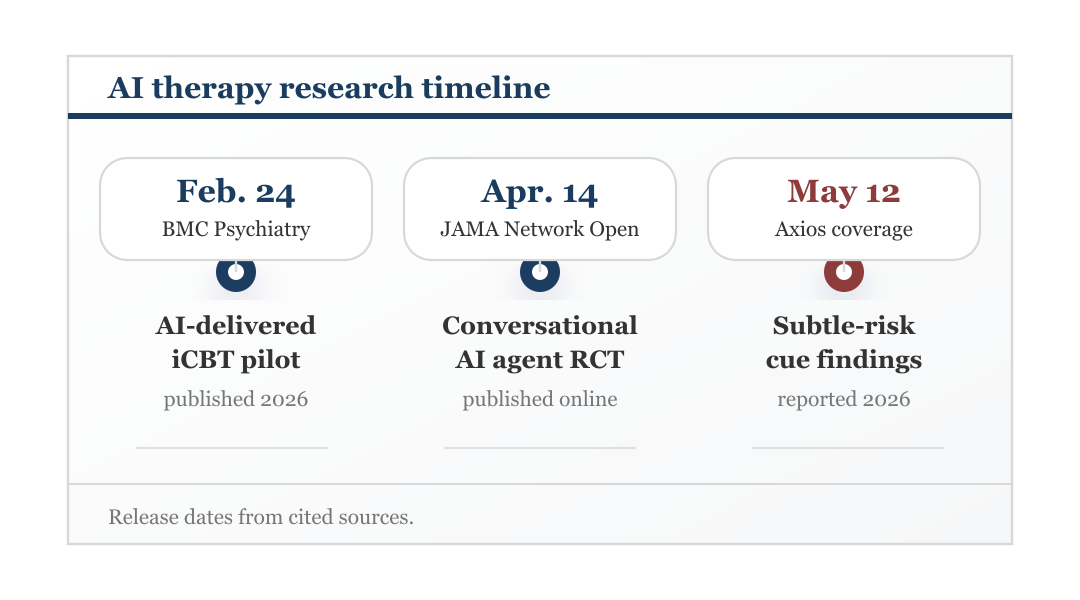
Medical and science outlets are starting to cover the emergence of “AI therapy,” including chatbots made for mental-health support. In Issue 9, we noted Pennsylvania’s lawsuit against a company whose chatbot allegedly presented itself as a psychiatrist and supplied an invalid license number. Now, recent studies suggest purpose-built AI chatbots can reduce some anxiety and depression symptoms (JAMA Network Open; BMC Psychiatry), while performing better at handling explicit suicide prompts than subtle or slow-building risk cues.
“We don't need to rush it in the next 5-10 years, but I just think what I see is such exciting technology coming down the road.”
Demis Hassabis on medical cures, recent interview.
11
Number of states that have enacted chatbot-specific bills, per analysts.
Local governments in Arizona and New York are being pressed over traffic-camera contracts. (KJZZ / WAMC)
About Plain Thinking
Grant Morgan is an attorney, former prosecutor and former Tribune Publishing reporter who covered Gary, Indiana, and Chicago’s northern suburbs. Plain Thinking covers AI and consequential technology affecting lawyers, police and courts.