Archive notice: The Initial Report is preserved inside Plain Thinking on VORASYNC. Archived issue text remains as originally published; new Plain Thinking issues and supplements publish at vorasync.ai/plain-thinking.
Major AI executives and biotech experts are lobbying Congress to tighten screening and record-keeping for companies that sell synthetic DNA/RNA. The argument is that AI could make it easier for bad actors to design risky biological sequences. While policy discussions around AI-enabled biotech are still in their early stages, firms within the field are moving fast. In recent months, Neuralink publicly claimed to have 20 “Telepathy” patients who can control computers with thought alone. The head of Google’s frontier AI lab, meanwhile, predicted all diseases could be cured within the next “decade or so.”
Cyber Takedowns
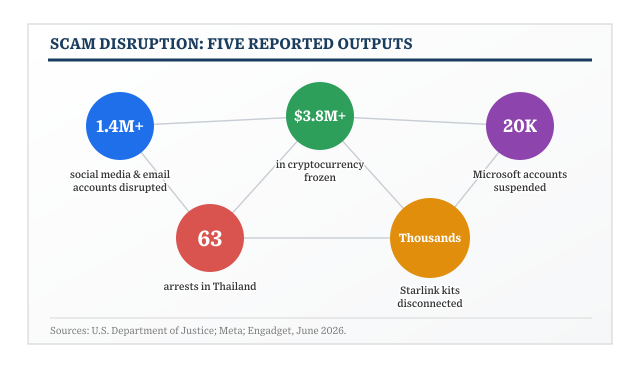
Graphic: The Initial Report
An unusually broad coalition of companies and governments completed disruption of a Southeast Asia-based scam ecosystem this week. Led by a Department of Justice strike force, tech giants including Meta and Microsoft shared intelligence that led to dozens of arrests and over 1 million social media accounts being disabled. The operation also extended into satellite internet technology and cryptocurrency, showing how modern enforcement is sharpening alongside the malicious operations it confronts.
“The last thing you want from a super-intelligent coworker is to be dishonest and lazy.”
Dr. Károly Zsolnai-Fehér, research scientist. YouTube
4
Months that music pathbreaker Nikki Jones says it took to “learn AI.”
Grant Morgan is an attorney, former prosecutor and former Tribune Publishing reporter who covered Gary, Indiana, and Chicago’s northern suburbs. Plain Thinking covers AI and consequential technology affecting lawyers, police and courts.